

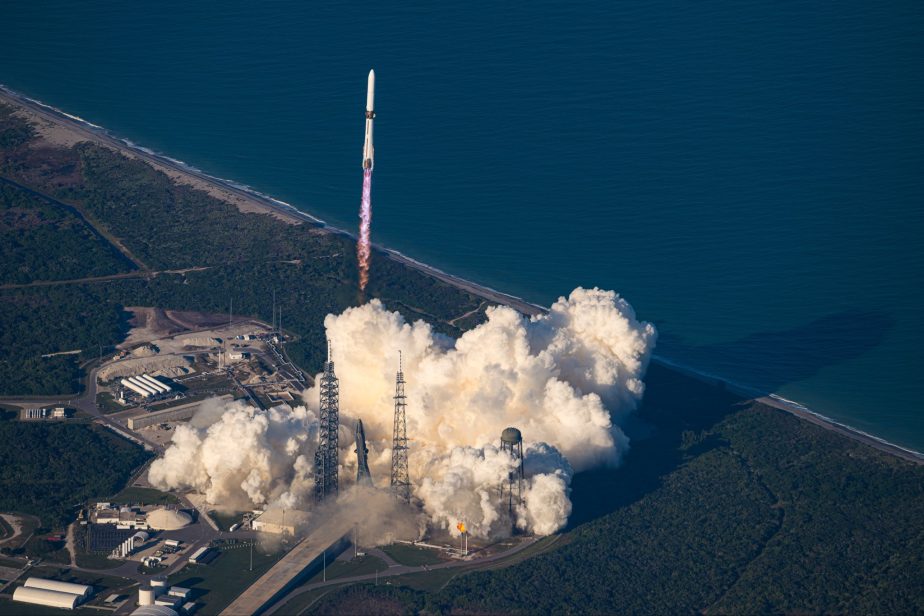
Cape Canaveral, FL — November 13, 2025 — Blue Origin’s heavy-lift rocket New Glenn completed a major step into deep-space operations on its second flight, successfully deploying ESCAPADE Blue and ESCAPADE Gold spacecraft for NASA and executing a first-ever landing of its first-stage booster. The mission reached orbit from Launch Complex 36 (LC-36) at Cape Canaveral Space Force Station and marked a significant milestone for reusable heavy-lift aerospace capability.
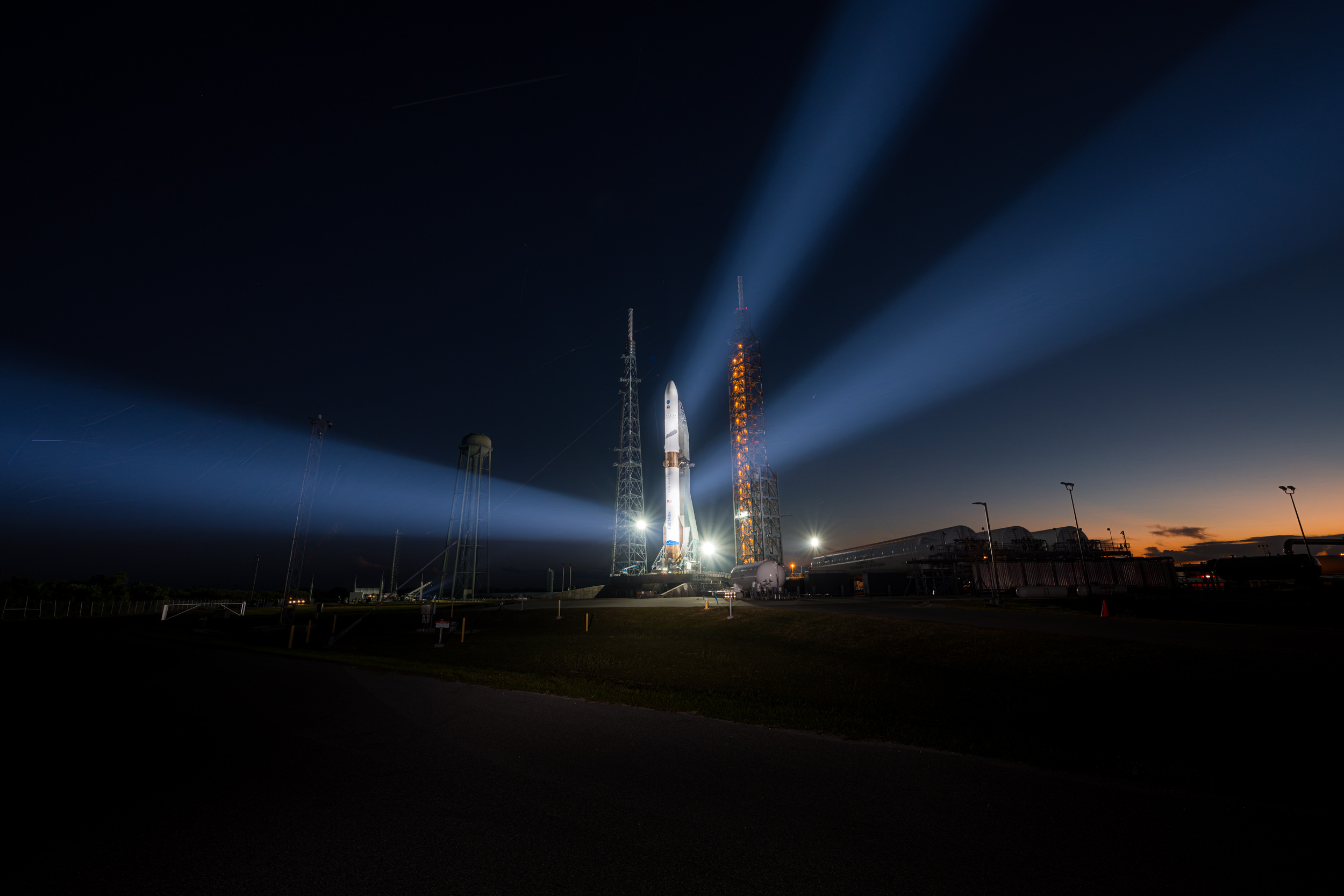
New Glenn on the launch pad at LC-36 ahead of the NG-2 mission (November 8, 2025). Image credit: Blue Origin
Mission Highlights
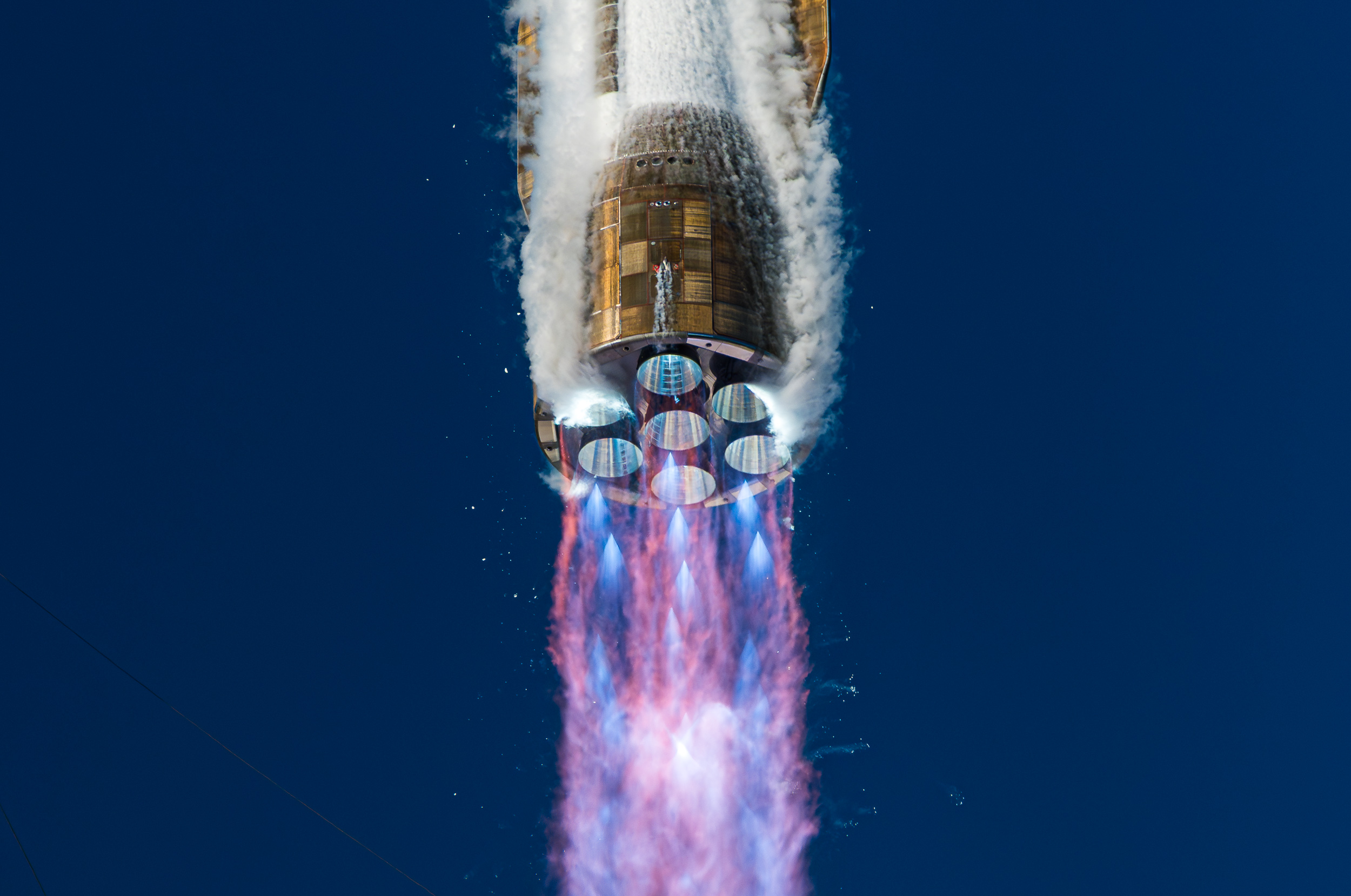
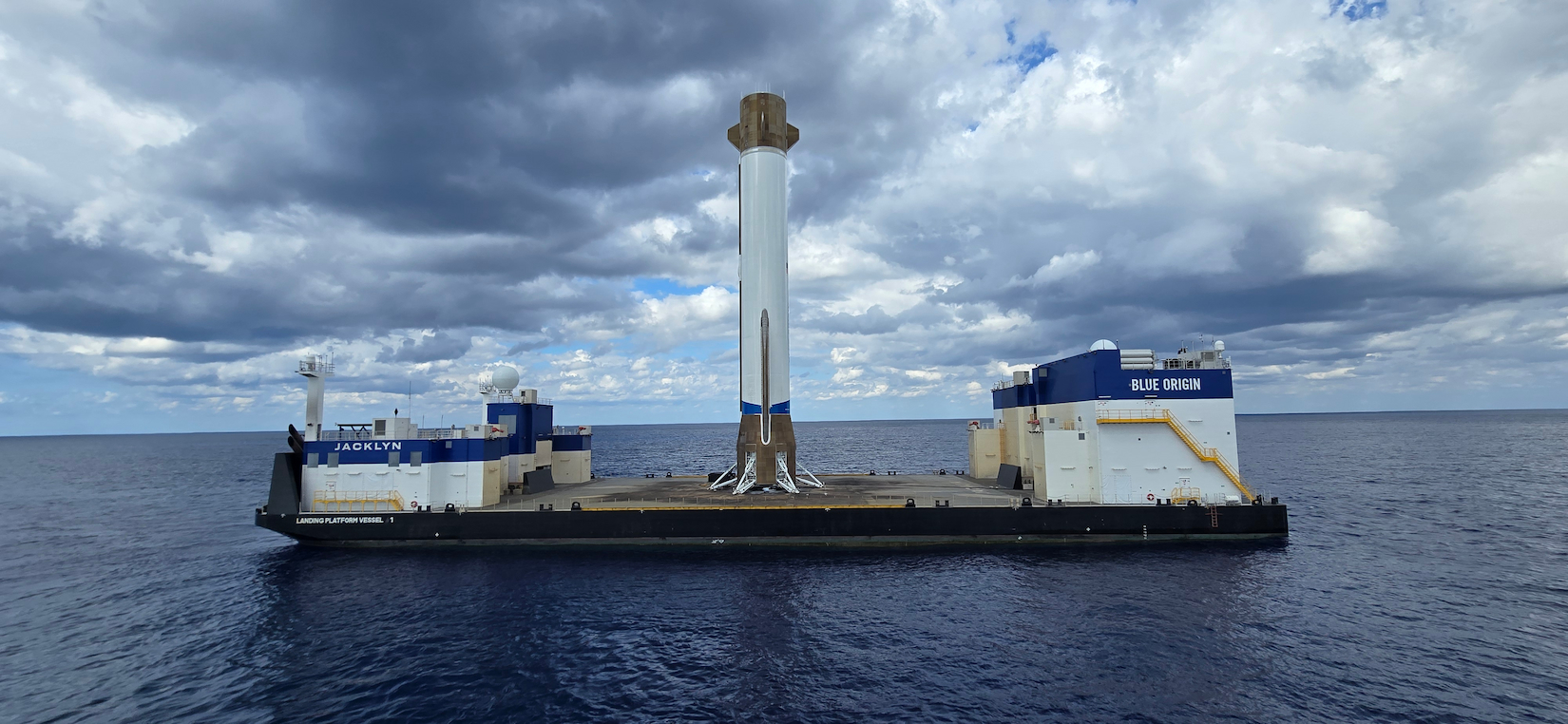
At 3:55 p.m. EST, NG-2 roared to life on seven BE-4 engines, soared into clear skies, and followed with stage separation that enabled the upper stage’s two BE-3U engines to fire and place the twin spacecraft on their trajectory to Mars. Meanwhile, the first stage executed its return and touchdown aboard the autonomous barge Jacklyn in the Atlantic—Blue Origin’s first successful landing of a New Glenn booster.
The ESCAPADE mission is designed to study solar-wind interactions with Mars’ magnetic field over a multi-year journey. As part of NASA’s SIMPLEx program, the twin spacecraft aim to address key questions about atmospheric loss and Mars’ habitability, supporting future human missions.
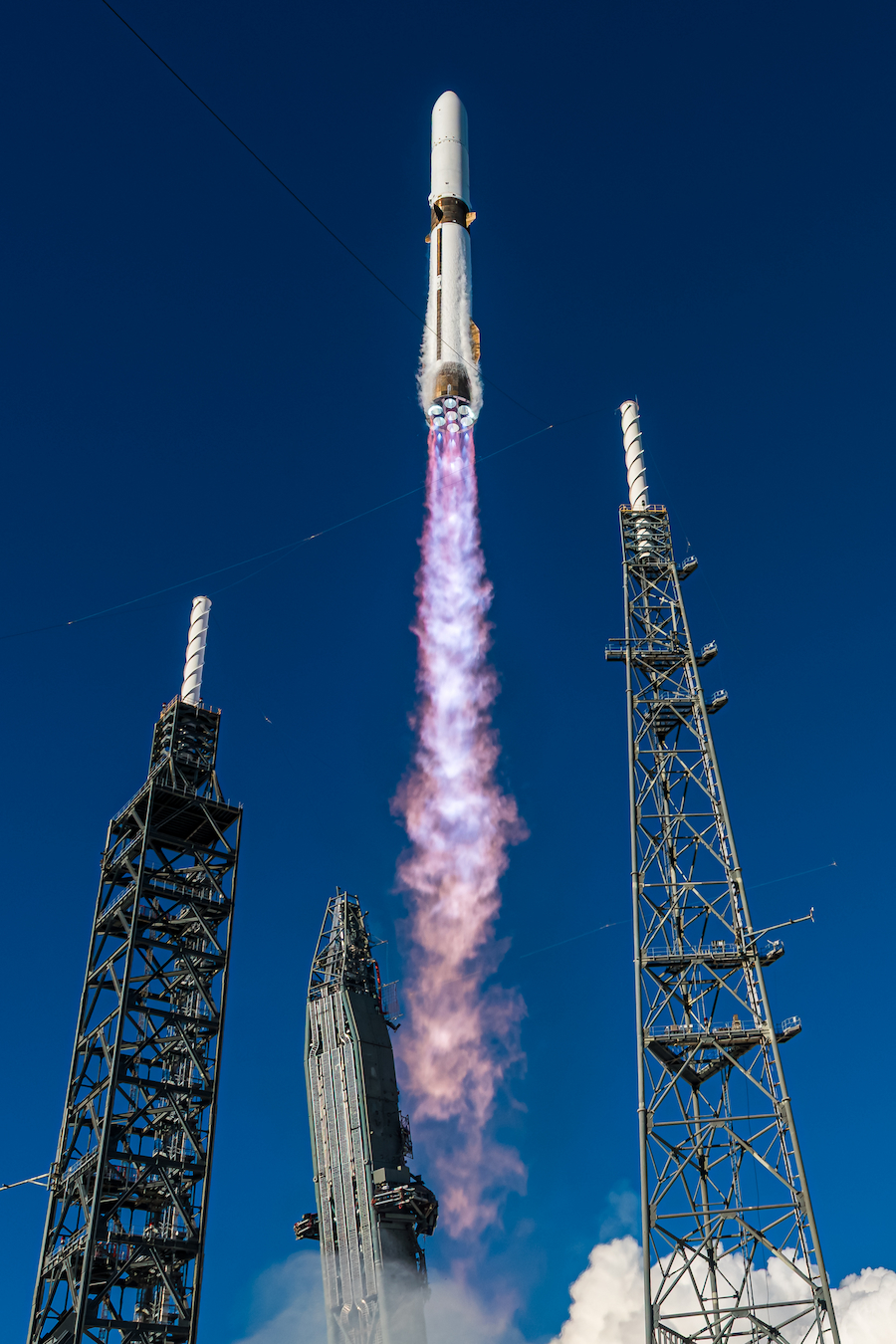
New Glenn at liftoff during the NG-2 mission. (November 13, 2025). Image credit: Blue Origin
What It Means for Aerospace
For the aerospace industry, NG-2 underscored two major shifts: heavy-lift rockets becoming truly reusable, and low-cost planetary science missions flying on new commercial launch architectures. The booster landing success further validates the engineering investment in the BE-4 engine and the integration of large-scale tooling, machining, and flight-hardware production. For suppliers, it represents growing demand for precision aerospace tooling, large-format components, and deep manufacturing integration.
-

- New Glenn at liftoff during the NG-2 mission. (November 13, 2025). Image credit: Blue Origin
-
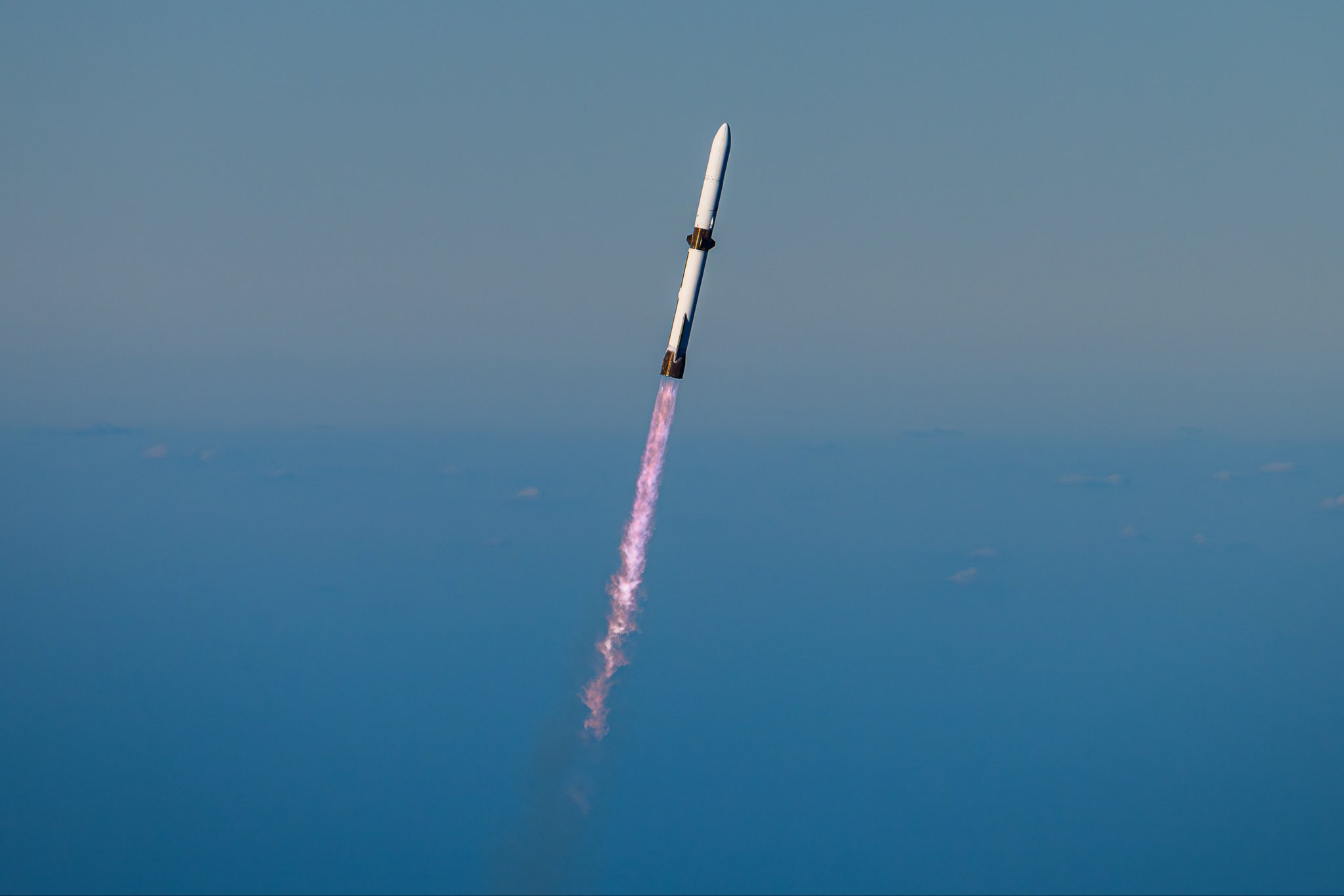
- New Glenn at liftoff during the NG-2 mission. (November 13, 2025). Image credit: Blue Origin
-
- The New Glenn booster after landing on Jacklyn in the Atlantic Ocean during NG-2. (November 13, 2025). Image credit: Blue Origin
Blue Origin NG-2 Mission Recap
Looking Ahead
With NG-2 now complete, New Glenn is set on a trajectory that supports future lunar and interplanetary missions—including the Blue Moon lander and Artemis-era architectures—while delivering on reusability goals that drive down cost and accelerate cadence. NASA, Blue Origin, and industry partners alike view this flight as a pivot point in the global aerospace launch market.
Futuramic remains committed to supplying the tooling, manufacturing infrastructure, and engineering support that underpin these next-generation missions—building the future of aerospace today.