

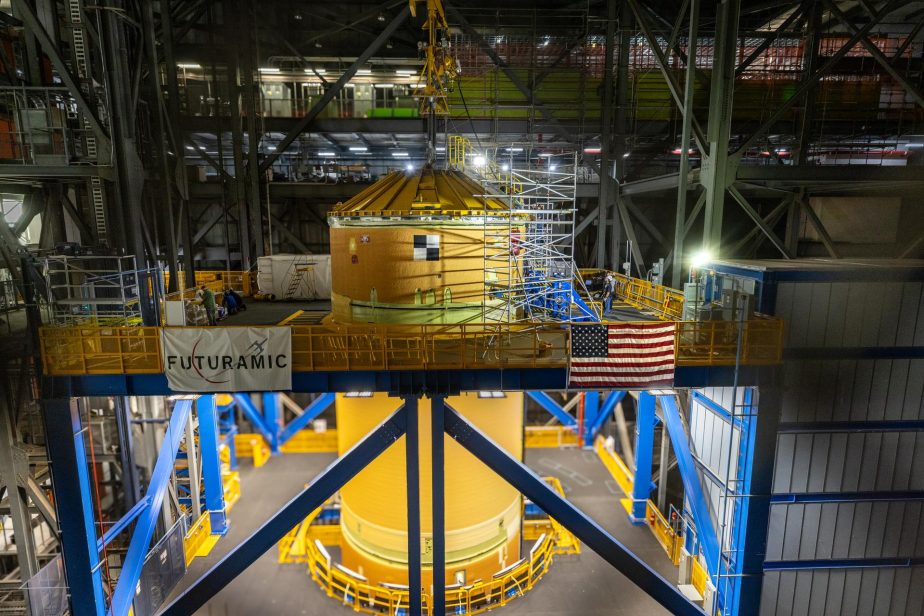
NASA continues to make significant progress toward the next phase of lunar exploration as technicians at the agency’s Kennedy Space Center recently completed operations to lift and position the Artemis III Space Launch System (SLS) core stage into High Bay 2 inside the Vehicle Assembly Building (VAB). The milestone marks the beginning of a new phase of vertical assembly operations for future Artemis missions.
NASA Begins New Phase of Artemis III Core Stage Assembly
Using a specialized lifting beam, teams carefully transferred the massive core stage from the VAB transfer aisle into High Bay 2, where additional assembly operations will continue. NASA technicians will next connect the core stage to the engine section as preparations move forward for Artemis III and future deep space missions. According to NASA, this is the first time core stage assembly operations for future Artemis missions are being conducted directly at the spaceport using the updated integration process.
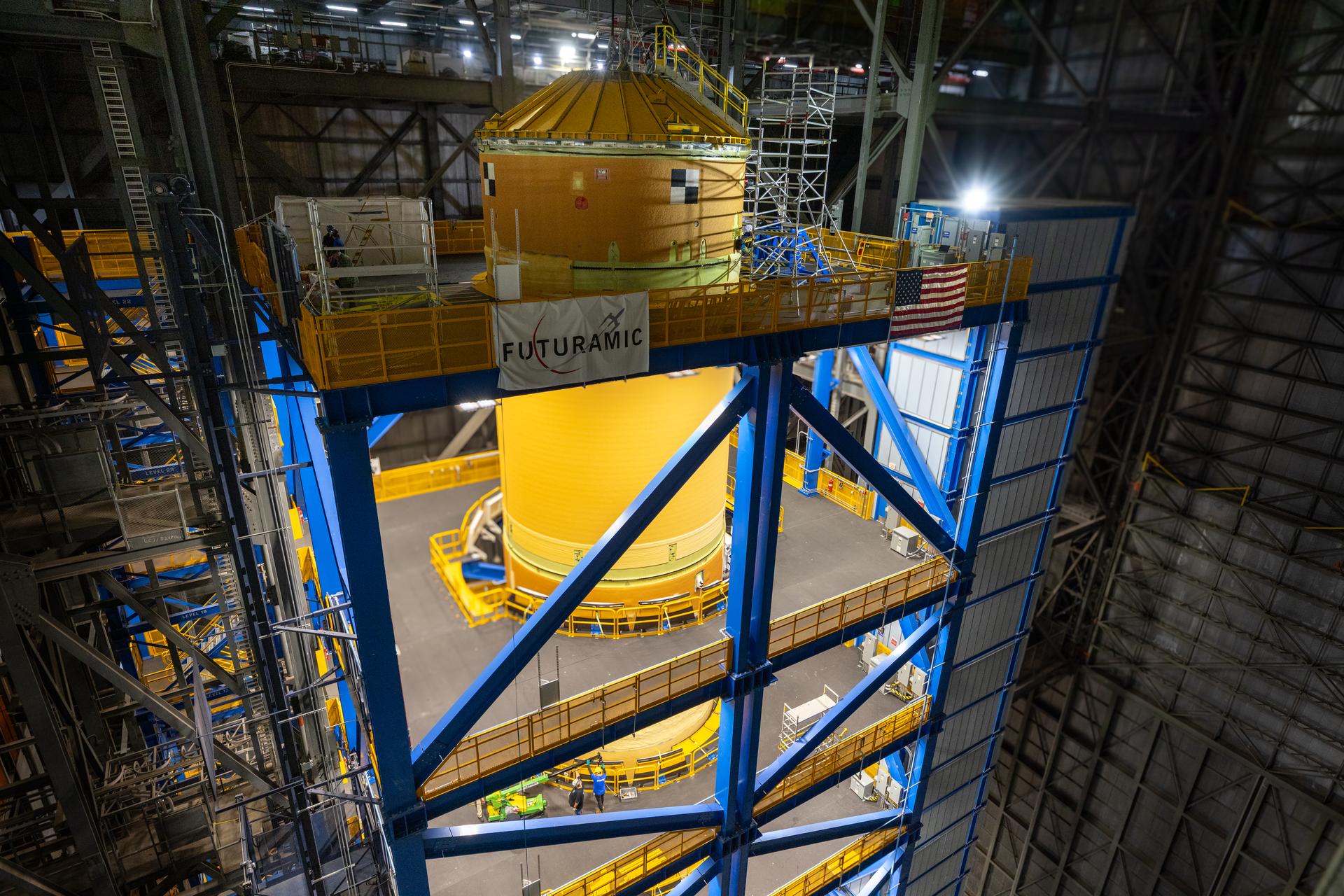
Image credit: NASA / Frank Michaux
Artemis III Hardware Arrives at Kennedy Space Center
The Artemis III core stage arrived at Kennedy Space Center aboard NASA’s Pegasus barge after traveling approximately 900 miles from the Michoud Assembly Facility in New Orleans, where the stage was manufactured. The upper portions of the stage include the liquid hydrogen tank, liquid oxygen tank, intertank, and forward skirt that form the backbone of the SLS rocket.
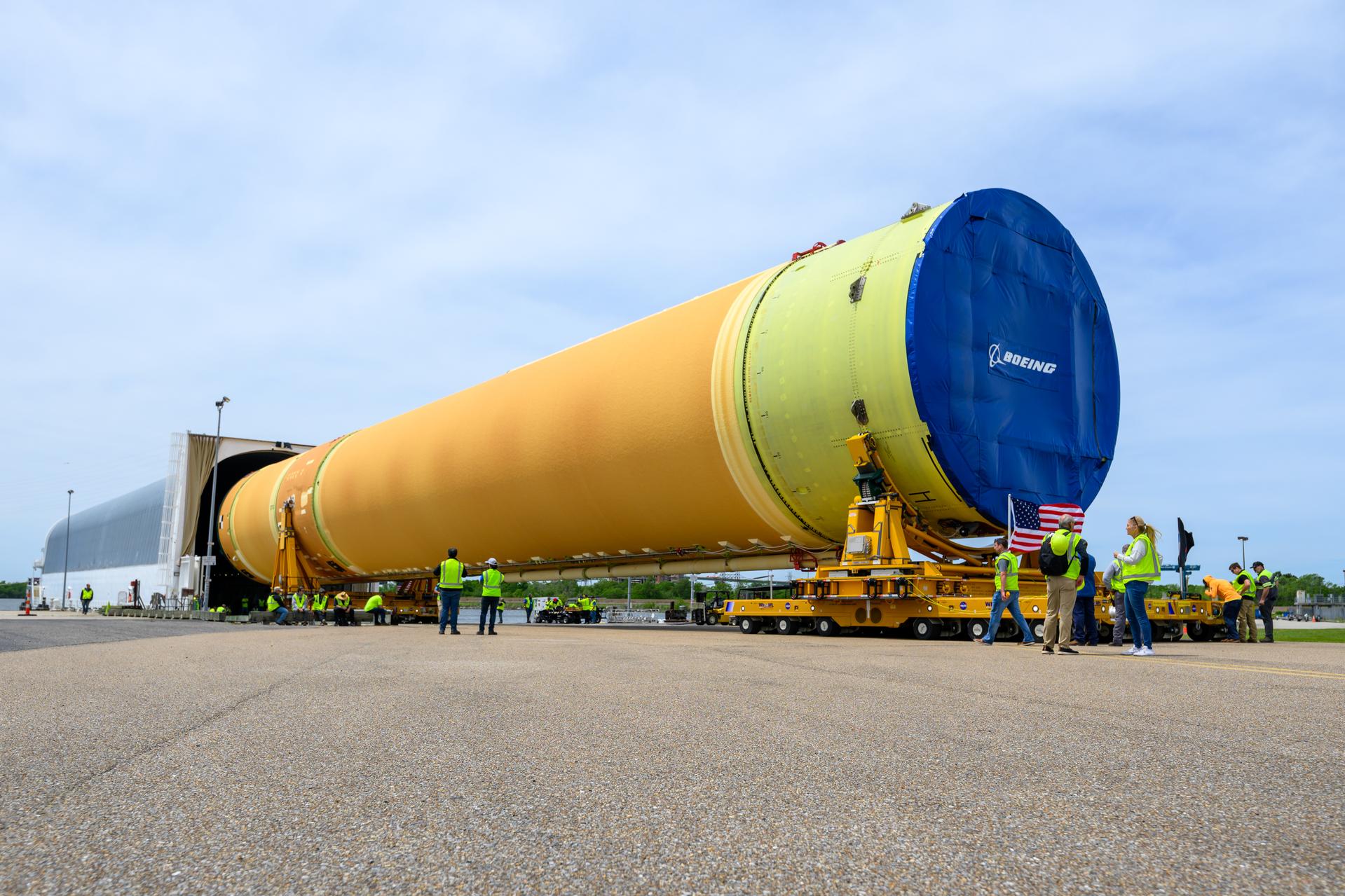
NASA moved the core stage, or the largest section, of the SLS (Space Launch System) rocket that will launch the crewed Artemis III mission in 2027 from the agency’s Michoud Assembly Facility to the agency’s Pegasus barge in New Orleans on April 20. Image credit: NASA / Eric Bordelon
Futuramic Tooling Supports Vertical Integration Operations
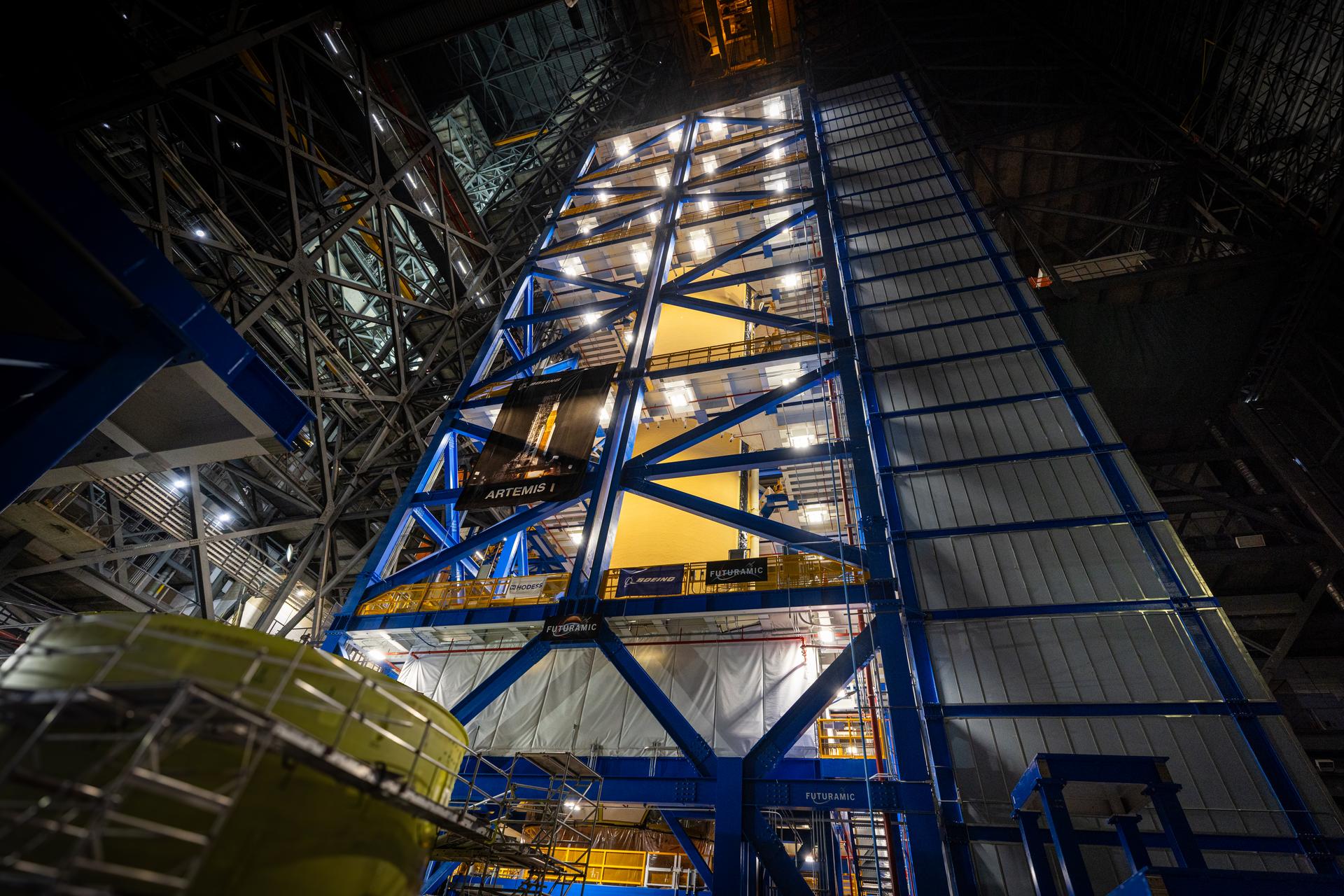
This next-generation assembly approach is supported by the Core Stage Vertical Integration Center (CSVIC) tooling designed and built by Futuramic in collaboration with Boeing. The tooling enables the SLS core stage to be positioned vertically during integration, providing technicians with 360-degree access for assembly, testing, and processing operations. By transitioning to vertical integration earlier in the assembly process, NASA and Boeing can streamline production flow, improve accessibility, and support parallel processing activities as Artemis missions continue to scale.
Technicians at NASA’s Kennedy Space Center in Florida complete operations of lifting and lowering the agency’s Artemis III SLS (Space Launch System) core stage into High Bay 2 in the Vehicle Assembly Building at NASA Kennedy on Monday, May 4, 2026. Image credit: NASA / Frank Michaux
Aerospace Tooling Designed for Precision and Efficiency
Futuramic’s tooling was specifically developed to support these complex integration operations while enhancing precision and efficiency during final assembly. As Artemis missions evolve, advanced aerospace tooling systems continue to play a critical role in supporting the infrastructure required for deep space exploration and future lunar missions.
Supporting the Future of Human Space Exploration
The recent milestone comes just weeks after the successful completion of the Artemis II mission, which returned astronauts to lunar flight for the first time since the Apollo era. As NASA advances toward future crewed lunar landing missions, infrastructure and tooling innovations at Kennedy Space Center continue to play a critical role in enabling the next generation of human space exploration.
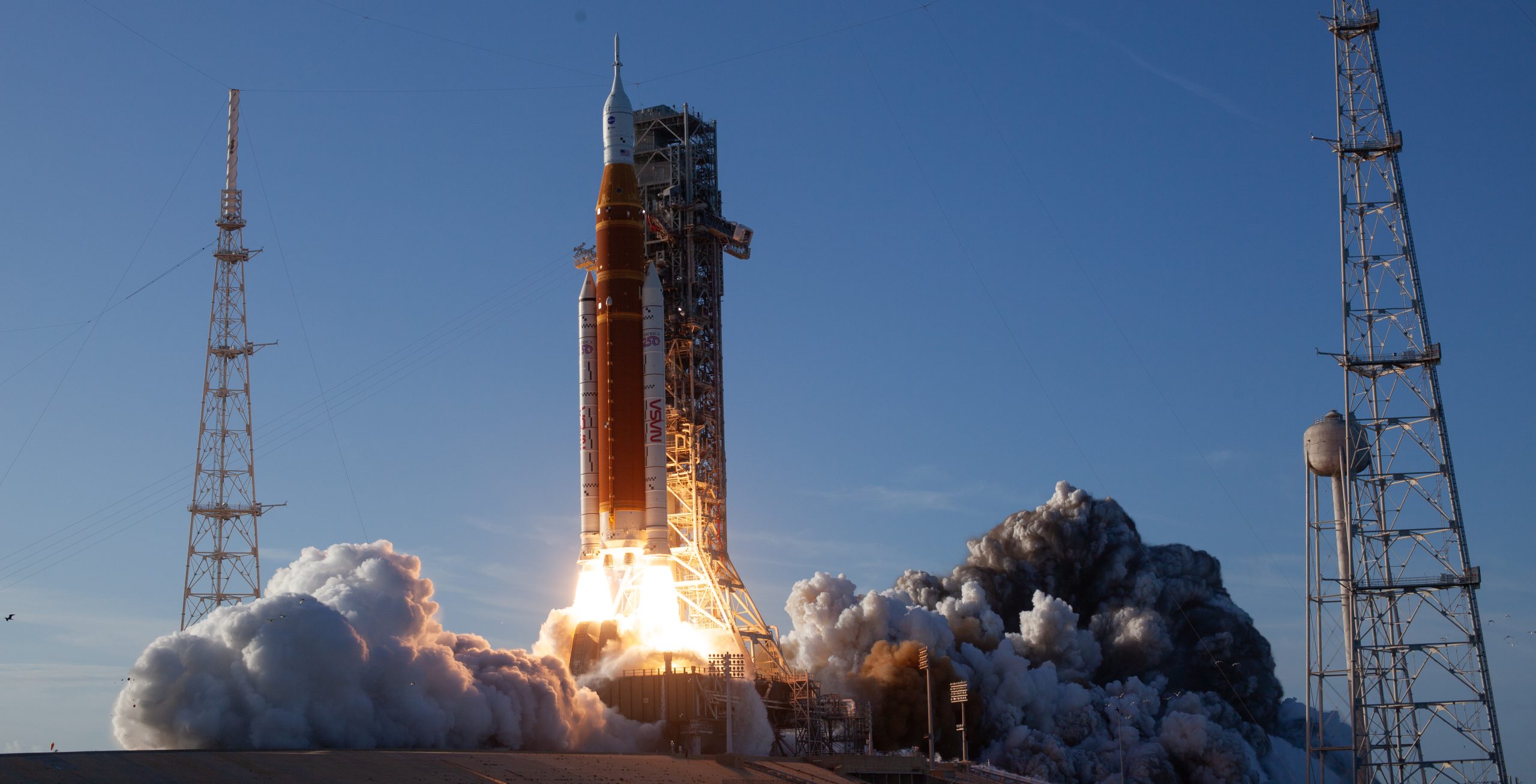
NASA’s Space Launch System rocket carrying the Orion spacecraft with NASA astronauts Reid Wiseman, commander; Victor Glover, pilot; Christina Koch, mission specialist; and CSA (Canadian Space Agency) astronaut Jeremy Hansen, mission specialist onboard launches on the Artemis II mission, Wednesday, April 1, 2026, from Launch Complex 39B at NASA’s Kennedy Space Center in Florida. NASA’s Artemis II mission will take Wiseman, Glover, Koch, and Hansen on a 10-day journey around the Moon and back aboard their Orion spacecraft. The quartet launched at 6:35 p.m. EDT, from Launch Complex 39B at the Kennedy Space Center. Photo Credit: (NASA/Aubrey Gemignani)
Futuramic is proud to contribute to the technologies and tooling systems helping support NASA’s Artemis program and the continued advancement of deep space exploration.